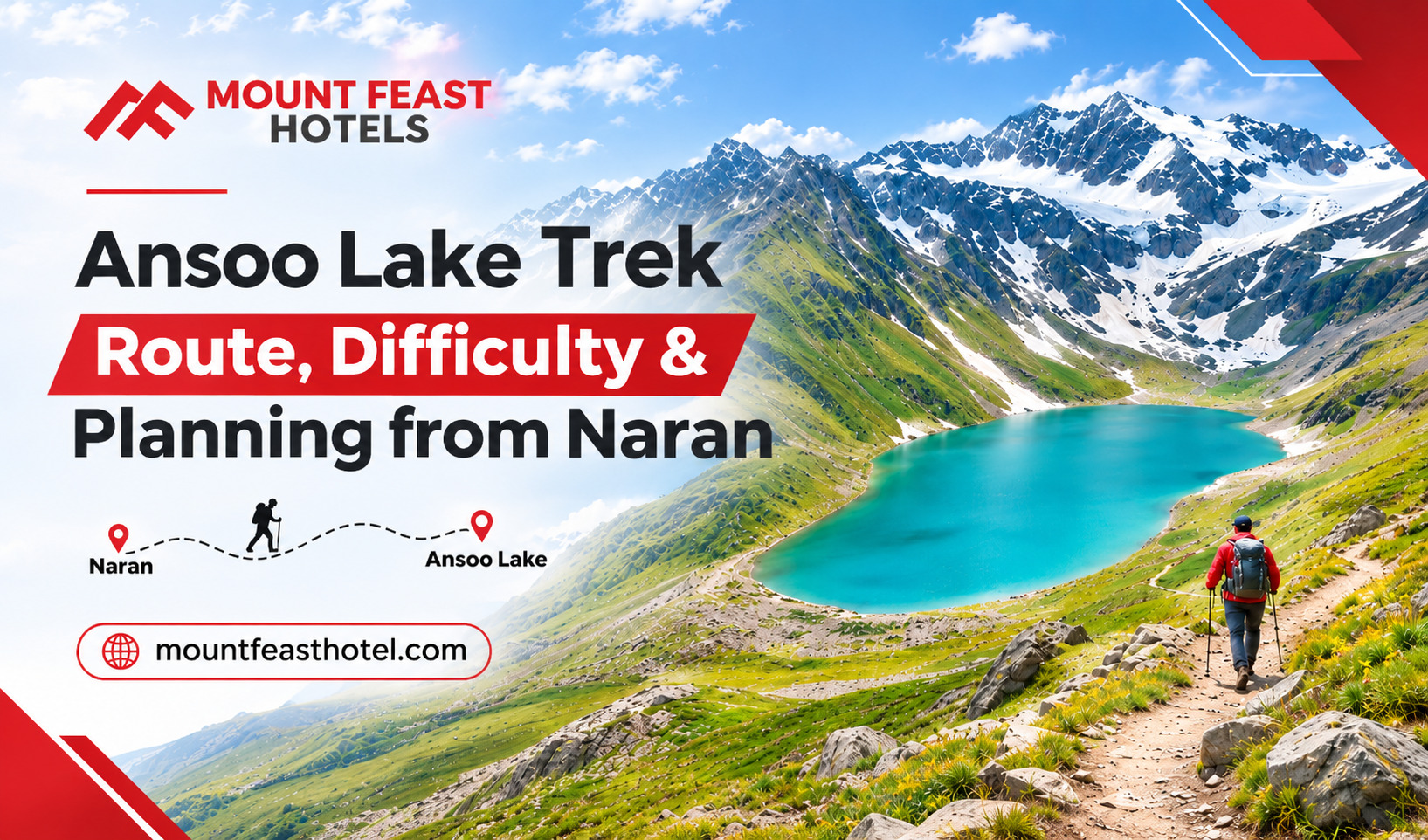
Ansoo Lake Trek | Route, Difficulty & Planning from Naran
11/16/2026 4:29:09 AM, By Hassan zeb.
11/16/2026 4:29:09 AM, By Hassan zeb.
The Ansoo Lake trek is a demanding
high-altitude hike that usually begins at Lake Saif ul Malook, near Naran.
Travellers first take a four-wheel-drive jeep from Naran to Saif ul Malook,
then continue on foot through steep mountain terrain. Fit hikers often need
most of a day for the return walk, and conditions can make the route
inaccessible even in summer.
Known for its teardrop outline and
dramatic setting near Malika Parbat, Ansoo Lake is not an ordinary roadside
attraction. This blog covers who should attempt the trek, how to reach the
trailhead, realistic walking times, equipment, guide arrangements and safe
turnaround decisions.

|
Planning
factor |
Typical
guidance |
|
Location |
Kaghan Valley,
Mansehra District, Khyber Pakhtunkhwa |
|
Lake elevation |
Approximately
4,245 m / 13,927 ft |
|
Trailhead |
Lake Saif ul
Malook, reached from Naran by jeep |
|
Difficulty |
Hard /
strenuous |
|
Walking
distance |
Frequently
estimated at 6–8 km one way; routes differ |
|
Walking time |
About 4–6 hours
uphill; allow 7–10+ hours return |
|
Preferred
season |
Generally
July–August, weather and permissions permitting |
|
Guide |
Experienced
local guide strongly recommended |
These numbers are useful for initial
planning, not guaranteed measurements. Trail distance, finishing point and pace
can change with snow, route choice and group fitness. Always verify access
shortly before departure.
Ansoo Lake lies in remote alpine terrain
near Malika Parbat in the Kaghan Valley. Its name comes from the Urdu word
ansoo, meaning a tear, because the lake takes on a distinctive teardrop shape
from an elevated viewpoint. The visible form changes with ice and seasonal
meltwater.
The lake is well above both Naran town
and Saif ul Malook. The most recognisable view is generally from higher ground:
reaching the viewpoint does not mean a descent to the water is safe or
necessary.
This hike is better suited to physically
fit travellers comfortable with long uphill walking, unstable ground and
changes in weather. Even someone who regularly exercises may find a sustained
climb above 3,000 metres challenging.
·
You regularly undertake long
walks or steep hikes and can manage several hours of climbing.
·
You can walk carefully on loose
rocks and descend when tired.
·
You can carry water, warm
clothing and basic emergency supplies.
·
You are prepared to follow your
guide and turn back without reaching the viewpoint.
Ansoo Lake is generally unsuitable for
casual sightseers, young children and travellers who cannot comfortably handle
a strenuous climb. Visitors who have only just arrived at altitude may also
need time to acclimatise. For a less physically demanding outing, the Saif ul
Malook lakefront is the more practical option when its jeep road is open.
The standard approach begins with a
roughly 9 km jeep journey from Naran town to Lake Saif ul Malook. Depending on
road and traffic conditions, allow approximately 30–60 minutes. This is a rough
mountain road, so visitors commonly use local 4×4 vehicles instead of ordinary
cars.
Before paying for the jeep, agree on the
full fare, passenger count, waiting arrangements, last return time and where
the driver will meet you. Ask whether the road is open and whether officials
are permitting an early enough departure for a full trekking day.
There is no direct jeep route to Ansoo
Lake. The walking trail heads into more isolated mountain terrain, eventually
reaching steep rocky or snow-covered sections near the upper viewpoint. Some
local operators may offer horses for part of the approach, but they are not a
replacement for the difficult final ascent.

The early portion leaves the busy lake
area behind. Depending on the chosen path, trekkers pass grazing ground, open
mountain scenery and uneven walking tracks. The starting altitude is already
high, so maintain a manageable pace and drink water regularly rather than
rushing through the easier ground.
The ascent becomes more sustained, with
boulders, loose stones and increasingly exposed slopes. This is a useful time
to assess group fitness, the weather and whether everybody has enough energy to
descend safely. Stop if someone develops troubling symptoms or falls behind the
agreed pace.
The upper approach is typically the
hardest part. Scree, lingering snow, low cloud or wet rock can make the final
section unsafe. A guide should judge the route on the day. From a suitable high
viewpoint, the lake’s unusual shape may become visible; avoid descending toward
its shore simply for a photograph.

The route should be planned as a full
mountain day, not an extension of a casual trip to Saif ul Malook. A frequently
quoted uphill trekking estimate is 4-6 hours, with another 3-4 hours for
descent. Breaks, snowfields, altitude and group speed may make the day longer.
|
Journey
section |
Indicative
duration |
|
Naran to Saif
ul Malook by jeep |
30-60 minutes |
|
Saif ul Malook
to Ansoo viewpoint on foot |
4-6 hours |
|
Brief
viewpoint/rest stop |
15-30 minutes,
only when safe |
|
Descent to Saif
ul Malook |
3-4 hours or
more |
|
Saif ul Malook
to Naran by jeep |
30-60 minutes |
An early hiking start is important, but
only when current administrative rules permit it. Set an agreed turnaround time
before leaving the trailhead. If progress is slow or weather deteriorates,
reverse course even if the viewpoint is close.
Ansoo Lake difficulty is best described
as hard or strenuous. Saif ul Malook is about 3,224 metres above sea level and
Ansoo Lake is commonly listed at 4,245 metres, creating an elevation difference
of roughly 1,000 metres. Much of that gain is on steep, uneven mountain ground.
·
Steep uphill walking and long
total hiking time.
·
Loose scree, wet rocks and
possible summer snowfields.
·
Rapid changes in cloud, wind
and precipitation.
·
High altitude and the
possibility of altitude sickness.
·
Fatigue and slipping hazards
during descent.
·
Unreliable mobile reception and
limited emergency access.
Headache, nausea, unusual fatigue and
dizziness can be signs of altitude illness. Do not keep climbing when altitude
illness is suspected; stop, tell your guide and seek appropriate medical
assistance. Severe or worsening symptoms require urgent attention and descent.
July and August usually provide the most
favourable window for a conventional guided trek, because part of the winter
snow may have melted. Nonetheless, heavy rainfall, storms and persistent
upper-slope snow can still close the route.
|
Period |
Trekking
outlook |
|
June |
Upper snow may
still create dangerous conditions |
|
July-August |
Preferred
planning window, subject to weather and official permission |
|
Early September |
Sometimes
possible; fresh snow and shorter days add uncertainty |
|
October-May |
Generally
unsuitable for standard tourist trekking |
An experienced local guide is strongly
recommended because snow cover, route visibility and hazards can change
quickly. Ask whether the guide has recently completed the exact approach and
whether they know current access restrictions and emergency arrangements.
·
Which trail and viewpoint will
we use, and is it open?
·
Are there snowfields, river
crossings or exposed rocky sections?
·
What is the latest safe
turnaround time?
·
How will we contact help if
mobile service fails?
·
What does the guide’s fee
include, and what equipment is not provided?
·
Where will the jeep meet us
after the descent?
Share your route and expected return time
with a trusted contact in Naran. Save offline maps, carry a power bank and
agree on a contingency plan. Do not count on continuous phone reception, and do
not assume a local guide automatically provides rescue transport.
Prepare for a strenuous hike rather than
ordinary sightseeing. Equipment should be suitable for cold, wind, rain and
unstable mountain paths.
·
Well-fitted hiking boots with
dependable grip and spare socks.
·
Warm base/mid layers, a
waterproof shell, hat and gloves as conditions require.
·
Sufficient drinking water-often
at least two litres per person, adjusted for heat and exertion.
·
High-energy snacks and a packed
meal.
·
Trekking poles, sunglasses,
sunscreen and a sun hat.
·
Basic first-aid supplies and
personal prescribed medication.
·
Charged phone, power bank,
offline route and headlamp.
·
A lightweight bag for carrying
all litter back.
The clearest morning in Naran can still
give way to cloud, rain or snow at the high viewpoint. Ask your guide to
reassess safety throughout the climb, especially before entering the upper
rocky slopes.
·
Turn back when thunder, heavy
rain or deteriorating visibility develops.
·
Do not cross steep snow or ice
that the group cannot negotiate safely.
·
Stop the ascent for concerning
altitude symptoms or significant exhaustion.
·
Return before the agreed
turnaround time, even if the lake is not yet visible.
·
Respect all official closures
and visiting-hour restrictions.
A successful trekking day is one that
ends with everyone returning safely. The viewpoint is optional when conditions
are poor.
Naran is a practical base for organising
the jeep journey, reviewing forecasts and preparing equipment. Booking
accommodation before arrival also provides a place to rest after the journey
into Kaghan Valley.
Mount
Feast Hotel Naran, on Main Mansehra–Naran Road, offers Deluxe, Executive,
Triplet, Quad and Presidential room categories. The hotel also has an in-house restaurant, parking
facilities and complimentary breakfast. Guests should confirm the specific room
inclusions and seasonal operations before booking.
Reach Naran, settle into your
accommodation and check official access hours, weather, trail conditions, guide
availability and jeep timing. Rest and prepare your bag rather than attempting
the hike immediately after a long road journey.
Attempt Ansoo Lake only if a guide
confirms the route is safe and official access allows a sufficiently early
start and return. If conditions are unsuitable, choose a permitted and easier
excursion instead.
Keep time for rest and your onward
journey. An extra buffer day helps if mountain weather disrupts plans, but no
itinerary guarantees trail access.
The walking distance is commonly
described as about 6–8 km one way, but reports vary according to route and
endpoint. Confirm the guide’s intended route rather than relying on one fixed
figure.
Many fit hikers allow 4–6 hours uphill
and around 7–10 hours or longer for the full return walk. Weather, snow and
fitness strongly affect the time.
It is generally unsuitable for unprepared
beginners. Fit first-time mountain hikers should seek experienced advice, guide
support and an honest assessment of their abilities.
No. Jeeps normally travel from Naran to
Saif ul Malook; the upper journey towards Ansoo Lake is on foot.
Horses may cover a portion of the
approach, but the steep upper section usually requires hiking. Confirm the
horse turnaround point before paying.
July and August are the usual planning
window, but snow, storms and official restrictions can prevent access on any
particular day.
A return-day hike may be possible for
well-prepared groups only when trail conditions and official hours permit an
early start and safe descent.
December is outside the usual trekking
season. Snow and seasonal road restrictions generally make the regular tourist
approach unsuitable.
Naran is a useful base for preparing and
arranging transport. Mount Feast Hotel Naran is one accommodation option,
subject to seasonal availability.
Ansoo Lake offers one of the Kaghan
Valley’s most distinctive alpine landscapes, but the approach should be treated
as a serious mountain hike. Separate the jeep transfer from the walking time,
choose a suitable season, hire an experienced local guide and establish a clear
turnaround plan.
When the route is open and conditions are
favourable, a well-prepared trekking day can be memorable. When access is
restricted or the weather is unsafe, choose an easier Naran excursion instead.
For accommodation before or after your trip, review current stays and seasonal
availability at Mount
Feast Hotel Naran.
Ready for a royal escape? Take a breathtaking Virtual Tour of our Executive Suite at Mount Feast Hotel Naran — where elegance meets the mountains. Glide through spacious interiors, cozy lounges, and panoramic views that redefine luxury. Your dream stay is just a click away — explore now and feel the comfort before you book!
Stay informed with the latest news, travel tips, and exciting updates from Mount Feast Hotels in Pakistan. From seasonal promotions and event highlights to travel guides and new services at our Islamabad, Naran, and Skardu properties — our blog keeps you connected. Discover everything you need to plan your perfect stay in Pakistan. Explore our latest stories and never miss an update from one of the best hotel brands in Pakistan.

Embark on a remarkable journey to discover the awe-inspiring wonders of nature by planning a Naran Tour. Nestled amidst Pakistan's picturesque landscapes, Naran Valley offers a haven of vibrant beauty that will leave you breathless. From cascading waterfalls to lush meadows and towering mountains, this hidden gem is a paradise for adventure seekers and nature lovers alike.

Nestled amidst the enchanting foothills of the Himalayas, Saif ul Malook Lake Pakistan also known as Jheel Saif ul Malook is a sight to behold. Its mystique and majesty have captivated the hearts of adventurers, nature lovers, and poets for centuries. With its crystal-clear turquoise waters reflecting the snow-capped peaks of the surrounding mountains, this natural wonder is a magnet for travellers seeking solace and serenity.

Discover the best times to visit Naran Valley with our comprehensive guide to weather in Naran Kaghan, seasonal tips, and top activities. Plan your trip today.

Discover enchanting snow-capped peaks & vibrant Naran Bazaar. Plan your stay at Mount Feast Hotel Naran. Hassle-free Naran Hotel booking online.

Mount Feast Hotel is the best 3-star Hotel in Kaghan Naran, located on the main Mansehra road. It is near Naran's well-known and well-liked tourist attractions and away from the busy city centre.

Manydomestic and international tourists visit Naran Valley every year and searchfor the best hotel in Naran. To Appreciate and marvel in the beauty that Nar

Skardu, nestled in the heart of Gilgit-Baltistan, is a haven for adventurers and nature enthusiasts alike. With its majestic mountains, serene lakes...

Are you planning a getaway to Naran Valley and want to return home with Instagram-worthy pictures that’ll make your followers swoon? This ultimate guide reveals the most iconic and hidden photography spots near Mount Feast Hotel Naran.

Discover the best layover hotel near Islamabad Airport. Stay at Mount Feast Hotel for short stays, transit comfort, and easy airport access. Book now online.

Plan a 6-night journey with Mount Feast Hotels featuring a 1-night stay in Islamabad near the airport and 5 nights across Naran and Skardu.

Explore Islamabad’s top hikes (Margalla Trails, Daman-e-Koh, Pir Sohawa) and must-see attractions. Practical tips & Mount Feast Hotel guide for your stay.
.jpg)
Discover the best family-friendly activities in Islamabad. Explore top kid-friendly attractions, parks, and tips for a perfect family vacation.

Discover the most romantic places in Islamabad for couples, from scenic sunsets to peaceful escapes, and enjoy a comfortable stay at Mount Feast Hotel.

Flying early from Islamabad? Discover a stress-free departure checklist and learn how an early morning flight hotel in Islamabad makes travel easier.

Planning solo travel to Islamabad? Discover safety tips, city highlights, and how choosing the right solo travel Islamabad hotel makes your trip confident

Looking for a hotel for business travel in Islamabad? Discover the best areas to stay, productivity tips and meeting-friendly hotels like Mount Feast.

Explore Islamabad food places for every taste; from street eats and fast food to fine dining restaurants in the city and at Mount Feast Hotel.
.jpg)
Explore top Islamabad events with this Islamabad festivals guide - Lok Mela, Eat Festival, ILF, Pakistan Day & more, plus tips on where to stay.

Explore eco-tourism in Islamabad. Learn how to travel responsibly in Margalla Hills, Rawal Lake, cultural villages & green city zones.

A practical guide to digital nomad Islamabad life: visas, SIMs, co-working, work cafes, safety, costs, and work-friendly hotels in Islamabad. Book room online

Discover the best Islamabad nightlife and evening activities for travelers. From scenic viewpoints to night markets explore what to do in Islamabad after sunset

Looking for wellness retreats in Islamabad? Discover luxury spa experiences, relaxation trends, and peaceful stay at Mount Feast Hotel for a rejuvenating escape

Explore the best shopping in Islamabad from luxury malls to traditional markets Discover top places for tourists to shop dine and experience local culture

Planning a Naran trip? Learn how to compare hotel locations, rooms, facilities, rates, reviews and booking terms before choosing the right stay.

Discover the Naran trip cost in 2026, including hotel rates, transport, food, jeep fares and sample budgets for couples and families.

Plan your Naran Kaghan trip with practical information on routes, weather, itineraries, places to visit, transport, hotels and where to stay.

Naran Kaghan Honeymoon Guide 2026 | Couple Travel Plan

Travel to Naran by Car| Route, Distance, Fuel Cost & Tips

Plan a 3-day Naran Kaghan family trip with a relaxed itinerary, Saif-ul-Muluk options, budget tips and a two-night stay at Mount Feast Hotel Naran.

Wondering what to pack for Naran Kaghan? Find clothing tips, footwear advice, family essentials and a practical checklist for your hotel stay and day trips.

Explore the Ansoo Lake trek from Naran : Saif ul Malook route, trekking time, difficulty, equipment, weather and safe return-day planning.
Mount Feast Hotels offers an unmatched blend of elegance, comfort, and top-tier hospitality across its prime locations in Islamabad, Naran, and Skardu. Whether you're seeking a peaceful mountain escape or a city retreat, our luxurious rooms, in-house dining, and modern amenities promise an unforgettable stay. With exceptional customer service, stunning views, and close proximity to popular attractions, we redefine what it means to stay in the best hotels in Pakistan. Choose us for a luxury experience that feels like home, wherever you go in Pakistan.